
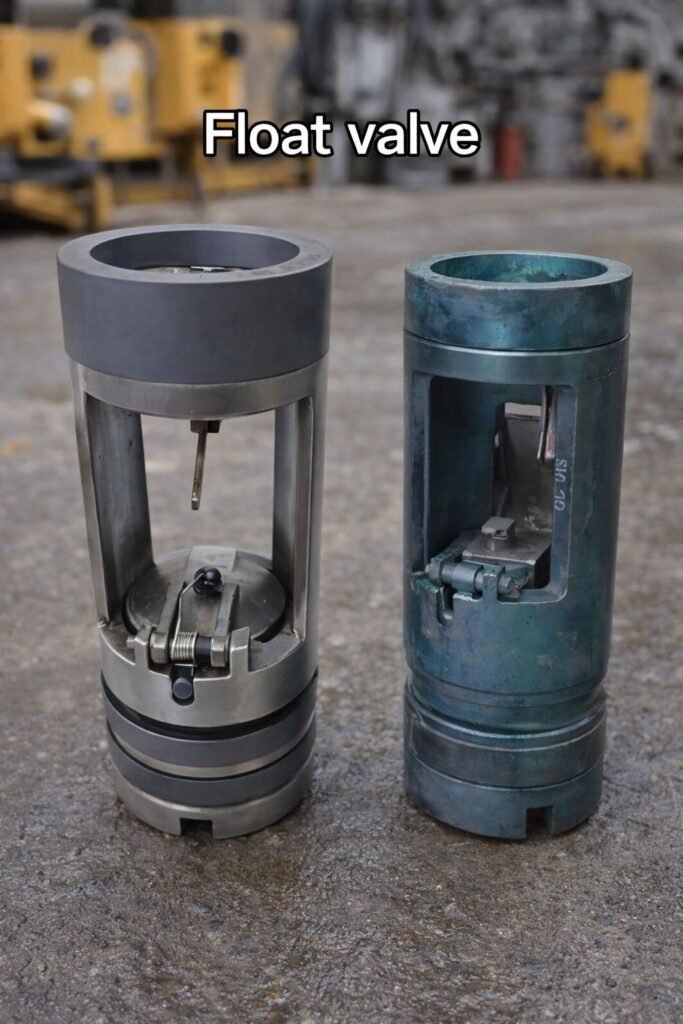
The main function of the float valve installed inside the drill pipe is to act as a one-way safety valve positioned in the lower part of the drill string (especially within the BHA).
It prevents the backflow of drilling fluid from the wellbore to the surface. This ensures that fluid flows only downward and prevents mud from rising back during connections.
- Where is it installed?
It is commonly installed inside the mud motor or in the lower BHA assembly.
- Main Functions:
Prevents backflow
Reduces the risk of wet connections
Assists in pressure control during a kick situation
Protects MWD/LWD tools from contamination
Keeps the drill string filled with fluid
- Why is it critical?
Without a float valve:
✓ Mud can flow back during connections
✓ Surface safety risks may increase
✓ The drill string can partially empty
✓ Formation pressure may enter the drill string
- Types of Float Valves:
Plunger type (Dart type) – Simple spring-loaded mechanism
Flapper type – Flap mechanism, more effective at higher flow rates
- Working Principle:
When pumps are running, fluid pressure pushes the valve open and allows downward flow.
When pumps stop or reverse pressure occurs, the valve automatically closes and blocks backflow.