
In our previous posts, we explored Sucker Rod Pump (SRP), Gas Lift, and Progressing Cavity Pump (PCP) as important artificial lift techniques used to improve well productivity.
Understanding Jet Pump Technology:
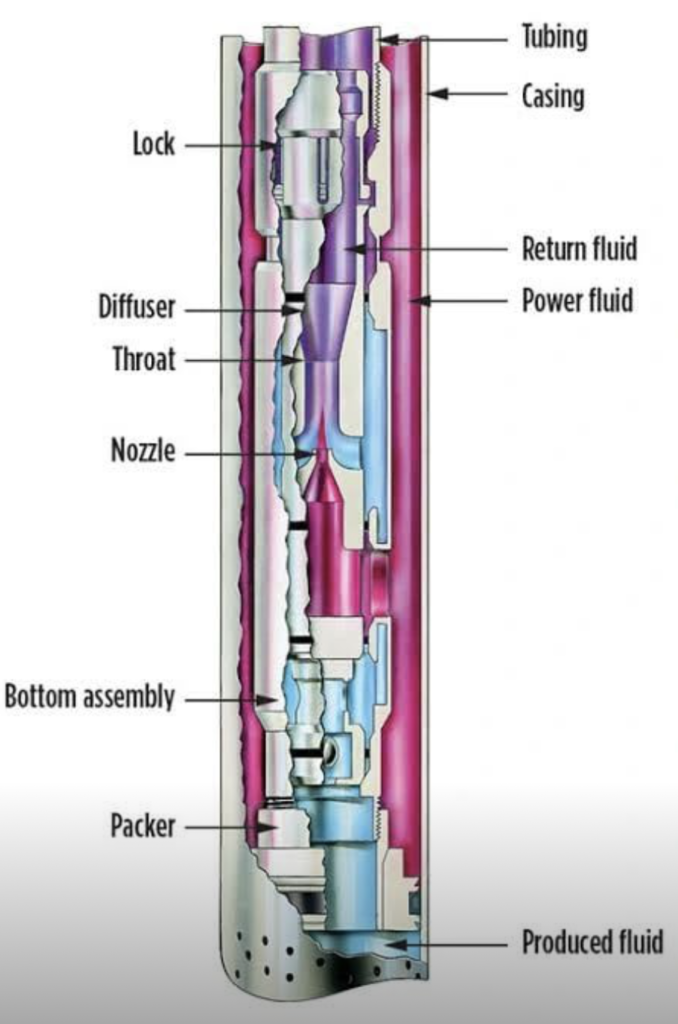
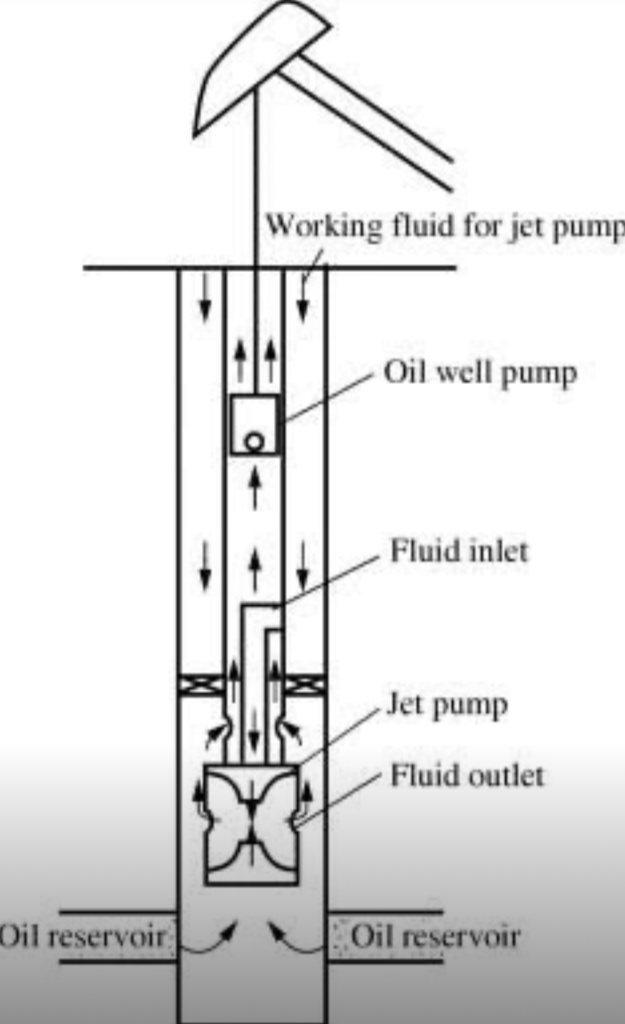
A Jet Pump is a hydraulic artificial lift system that uses the energy of high-pressure power fluid to lift produced fluids from the well.
One of its biggest advantages is that it contains no moving mechanical parts downhole, making it particularly suitable for wells producing sand or solid particles.
The system works based on the Venturi effect, where fluid velocity increases through a nozzle and generates a pressure drop that pulls reservoir fluids into the pump.
How the Jet Pump Lifts Fluids :
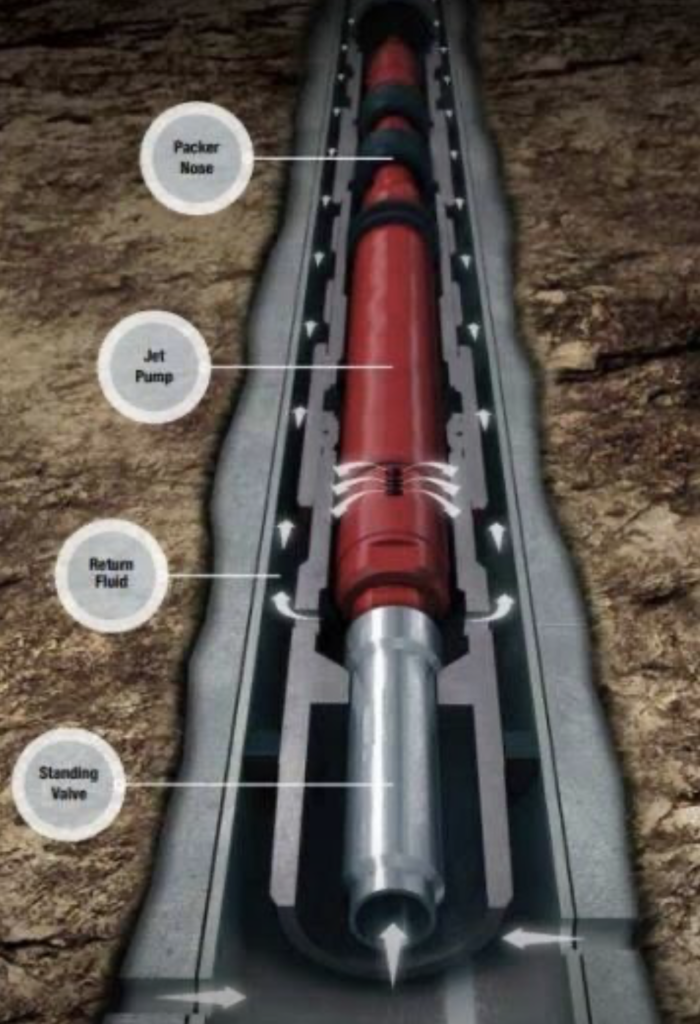
a) High-pressure power fluid is pumped from the surface down the well
b) The fluid passes through a nozzle, dramatically increasing its velocity
c) This creates a low-pressure zone that draws formation fluids into the pump
d) The produced fluids mix with the power fluid in the throat section
e) The combined fluid stream then flows upward to the surface
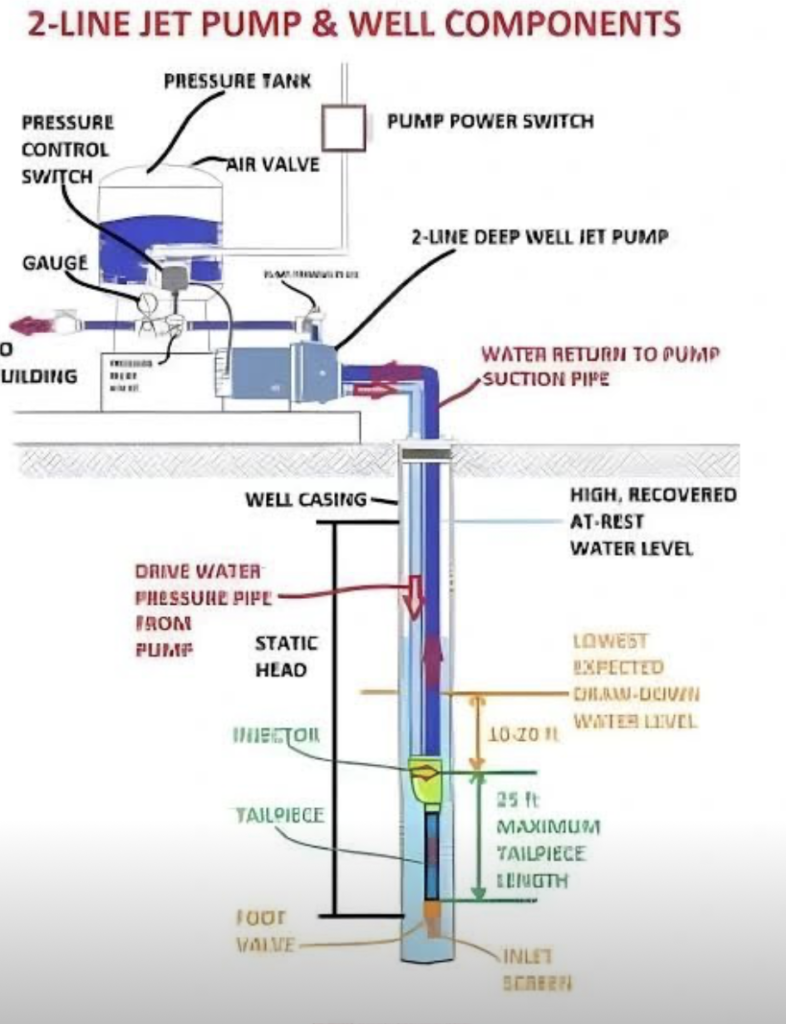
Key Elements of a Jet Pump System:
(A) Downhole Components:
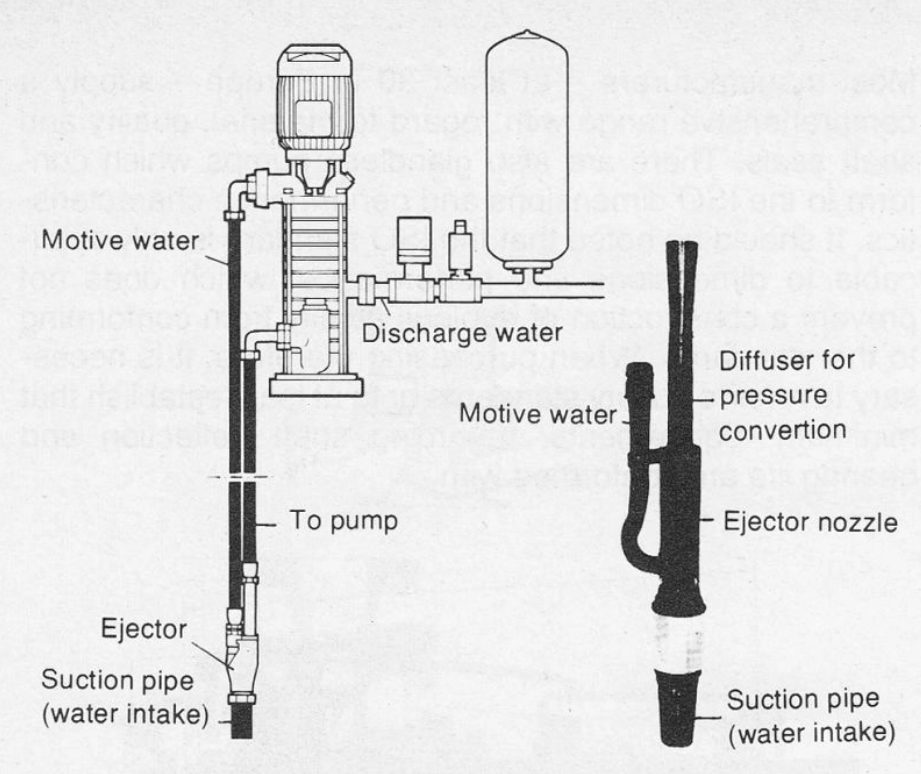
a) Nozzle
b) Throat (mixing chamber)
c) Diffuser
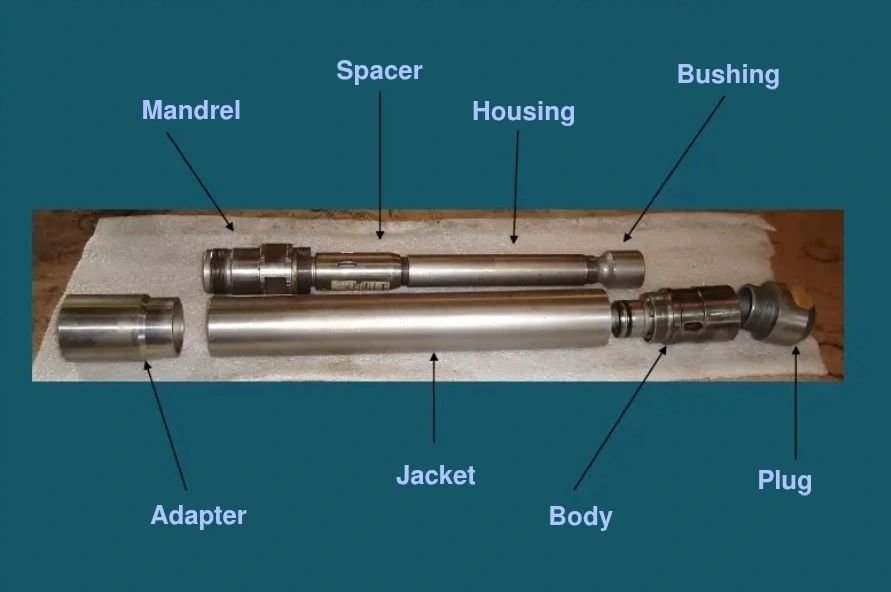
d) Pump body or housing
(B) Surface Facilities:
a) High-pressure surface pump
b) Power fluid storage tank
c) Control valves and surface piping
d) Production separation equipment
Available Jet Pump Configurations:
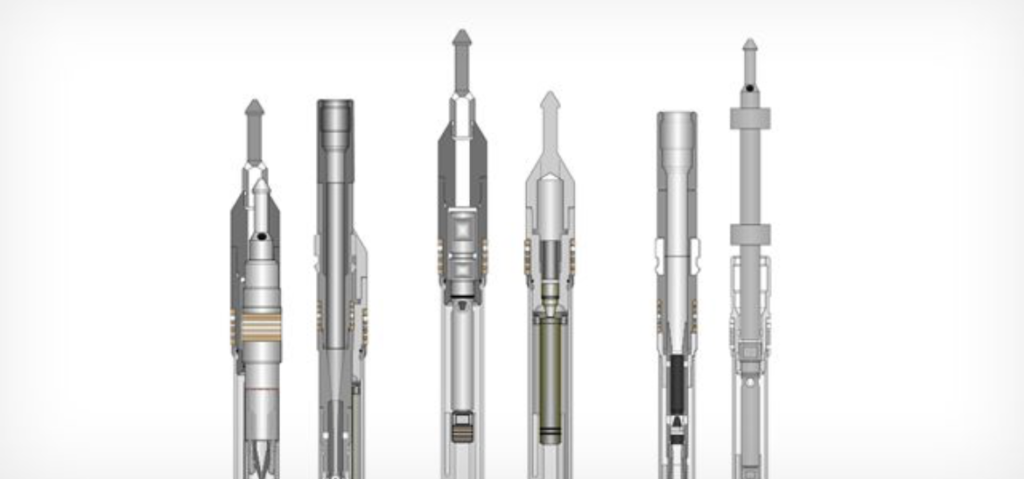
a) Tubing Jet Pump
Installed inside the tubing and widely used in conventional wells.
b) Retrievable Jet Pump
Designed to be retrieved and replaced without pulling the tubing, reducing intervention time and cost.
c) Hydraulic Jet Pump System
The most common configuration, driven by circulating liquid power fluid from the surface.
What are the Benefits of the Jet Pump:
a) No moving parts downhole, which increases reliability
b) Performs well in wells producing sand or solids
c) Suitable for deep, deviated, and horizontal wells
d) Operates effectively in high-temperature environments
e) Maintenance and pump replacement can be relatively easier
Factors to Consider Before Selecting This System:
a) Lower efficiency compared to systems such as ESP
b) Requires high-pressure surface pumping equipment
c) Energy consumption may be higher in some cases
d) Proper nozzle and throat design is essential for optimal performance
Latest Trends in Jet Pump Applications:
Recent advancements in hydraulic design and nozzle optimization have improved the efficiency of Jet Pump systems in challenging wells.
Modern engineering tools now allow better power fluid rate optimization and pump sizing, helping operators achieve improved lifting performance while reducing operational costs.