
Designing a casing program is not just about running pipes — it’s about managing pressure, protecting formations, and ensuring well integrity from surface to reservoir.
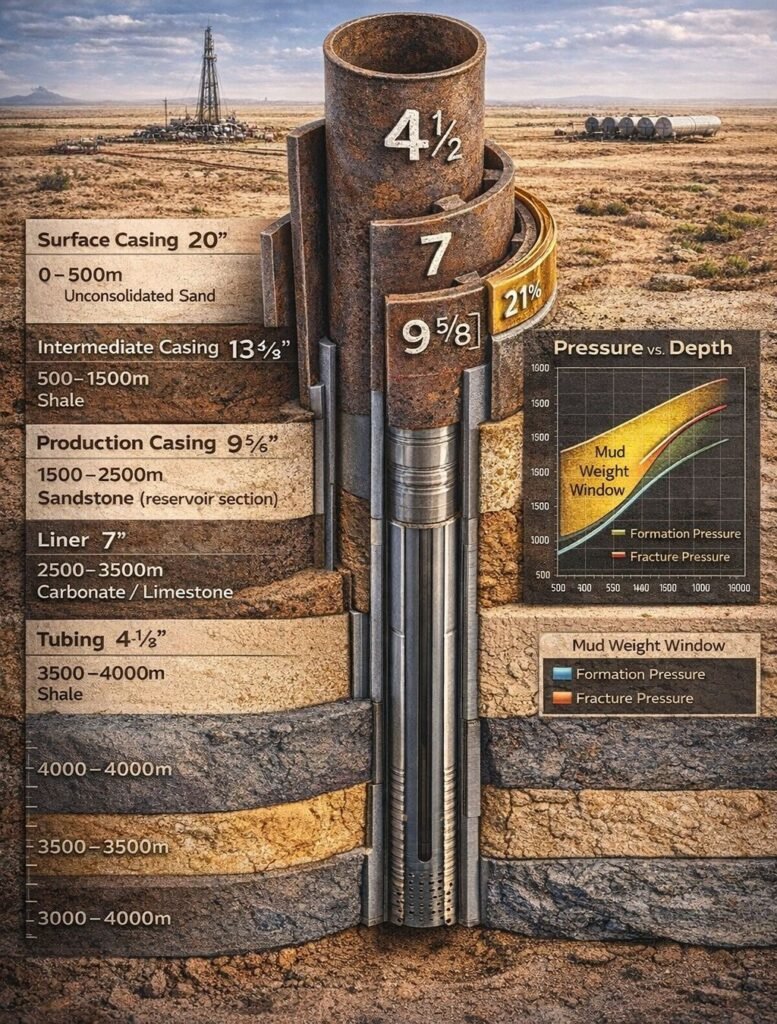
This visual breaks down a standard well architecture with a clear engineering perspective:
Surface Casing (20”)
0–500 m
Stabilizes unconsolidated formations and protects shallow aquifers.
Intermediate Casing (13 3/8”)
500–1500 m
Isolates problematic shale zones and balances wellbore stability.
Production Casing (9 5/8”)
1500–2500 m
Covers the reservoir section and prepares the well for production.
Liner (7”)
2500–3500 m
Extends well depth while optimizing cost and maintaining pressure control.
Tubing (4 1/2”)
3500–TD
Provides a controlled path for hydrocarbon production to surface.
WHY THIS MATTERS
A successful casing design ensures:
- Well integrity under varying pressure regimes
- Isolation between formations
- Safe drilling within the mud weight window
- Long-term production efficiency
The pressure vs depth relationship defines everything — stay between formation pressure and fracture pressure, and you stay in control.