
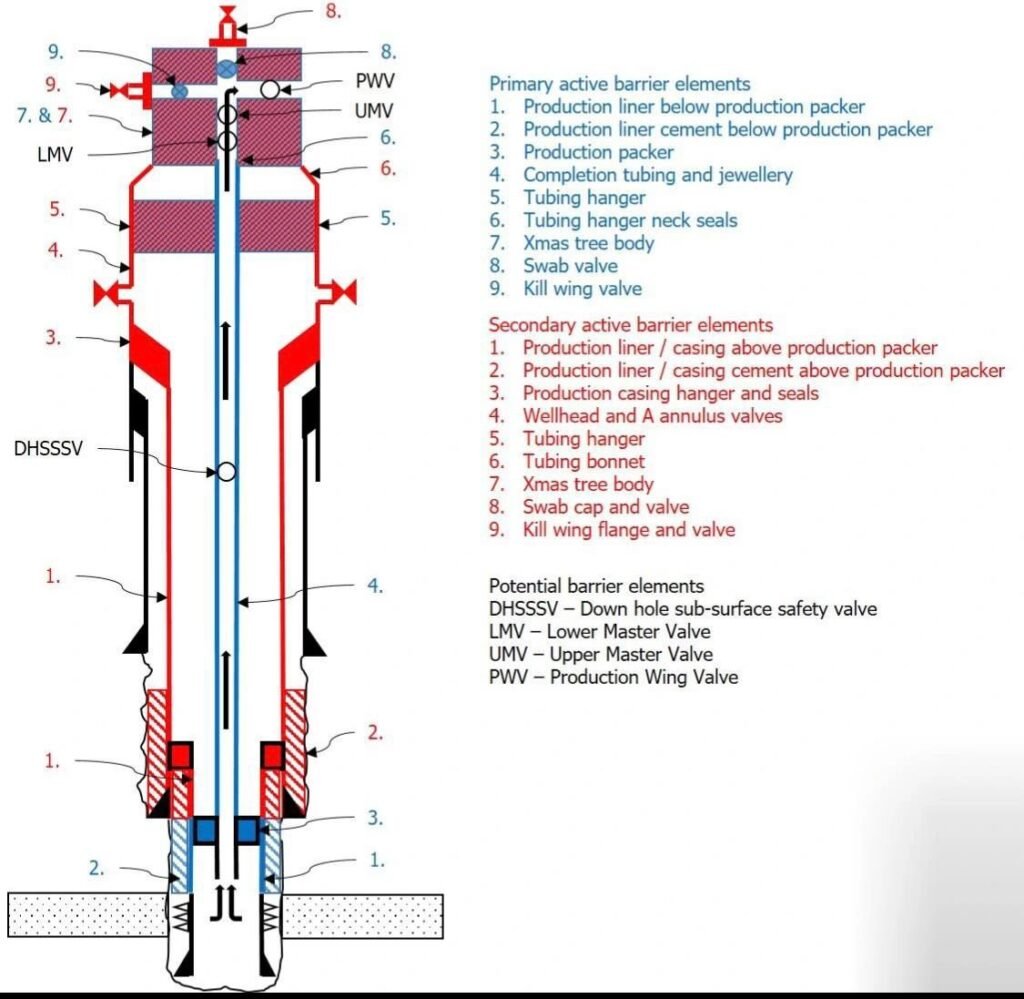
Well Integrity is a fundamental concept in drilling and production, focusing on maintaining a wellbore that is properly sealed to ensure safe fluid containment throughout the well’s life. Without proper management, compromised well integrity can result in blowouts or contamination, making it crucial to maintain control and oversight throughout the well’s life cycle.
What is Well Integrity?
Well integrity refers to a well’s ability to safely contain and control fluids, ensuring the protection of people, the environment, and infrastructure. This involves maintaining well structures such as casing, tubing, and cementing to prevent leaks or failures, guaranteeing control over fluid flow within the well.
Well Barriers
Well barriers are essential for maintaining well integrity and preventing the uncontrolled release of fluids. Key examples include:
-Blowout Preventer(BOP): A surface barrier that prevents uncontrolled pressure release.
-Cement Barriers: Seal the wellbore between casing and formation to prevent fluid migration.
-Wellhead/Christmas Tree: Controls pressure and isolates the wellbore.
-Downhole Safety Valves (DHSV): Prevent uncontrolled fluid flow in case of failure.
-Packer: Isolates sections of the wellbore to prevent fluid movement.
-Isolation Plugs: Isolate specific zones, particularly during abandonment or intervention.
Tubing String/Casing: Controls fluid flow and acts as a critical barrier when combined with safety valves.
Well integrity is maintained throughout the well’s life cycle, from planning and design to construction and installation, monitoring and maintenance, and compliance and documentation, ensuring the well remains secure, functional, and compliant with safety and environmental standards.