
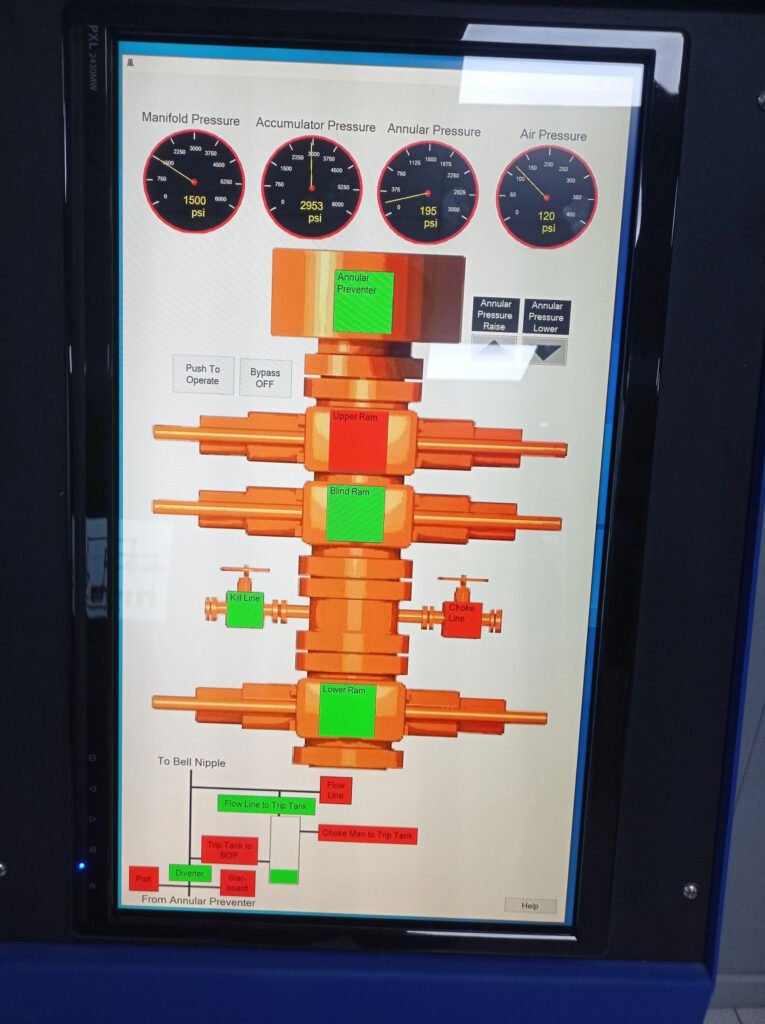
Test Pressures and Acceptance Criteria
BOP (Blowout Preventer) testing is a mandatory well control requirement to verify the integrity, sealing capability, and functionality of the BOP stack before any drilling operations.
1-BOP Testing on Test Stump (Surface Test)
The BOP stack is installed on a test stump at surface and pressure-tested before running it on the well.
Typical Test Pressures:
Annular Preventer
-Low-pressure test: 250–500 psi
-High-pressure test: 70% of rated working pressure
Pipe Rams / Blind Rams / Shear Rams
-Low-pressure test: 250–500 psi
-High-pressure test: 100% of rated working pressure
Choke & Kill Lines, Valves, and Connections
-Test pressure: 100% of rated working pressure
This test confirms:
-Sealing efficiency
-Valve integrity
-Correct mechanical assembly
-System readiness
2-BOP Testing on Wellhead (After Installation)
After the BOP is landed and locked onto the wellhead, a second pressure test is conducted to confirm well integrity and barrier reliability.
Well Isolation During Testing:
-A cup tester or casing shoe is used as the bottom barrier
-Pipe rams are tested using test pipe with correct OD
Typical Test Pressures:
Annular Preventer
-Low-pressure test: 250–500 psi
-High-pressure test: 70% of rated working pressure
Pipe Rams
-Low-pressure test: 250–500 psi
-High-pressure test: 100% of rated working pressure
BOP-to-Wellhead Seal / Wellhead Connection
-Test pressure: MASP (Maximum Anticipated Surface Pressure) or as per well program
Acceptance Criteria
-No pressure drop during the hold period (typically 5–10 minutes)
-No visible leaks
-Full compliance with well control procedures and regulatory standards
Why This Is Critical
BOP testing ensures the primary well control barrier is fully operational before drilling, protecting:
-Personnel safety
-The environment
-The asset and well integrity